
Written around the Plastiki expedition, 2010
Sailing Toward a Strategy of Hope in the Land of Many Colored Things
By William McDonough.
In our book, Cradle to Cradle, chemist Michael Braungart and I asked readers to imagine a design assignment:
Imagine that you have been given the assignment of designing the Industrial Revolution, retrospectively. With respect to its negative consequences, the assignment would have to read something like this:
Design a system of production that puts billions of pounds of toxic material into the air, water, and soil every year;
produces some materials so dangerous they will require constant vigilance by future generations; results in gigantic amounts of waste;
puts valuable materials in holes all over the planet, where they can never be retrieved;
requires thousands of complex regulations, not to keep people and natural systems safe, but to keep them from being poisoned too quickly;
measures productivity by how few people are working;
creates prosperity by digging up or cutting down natural resources and then burying or burning them;
and erodes the diversity of species and cultural practices.
As a result of research in the last decade and the brave explorations of Captain Charles Moore, we might have to add to the above list: puts plastics in the ocean, specifically the north Pacific gyres, where the ratio of plastic to zooplankton is 36 to 1.
Thirty-six times as much plastic as plankton! What are we doing to the planet?
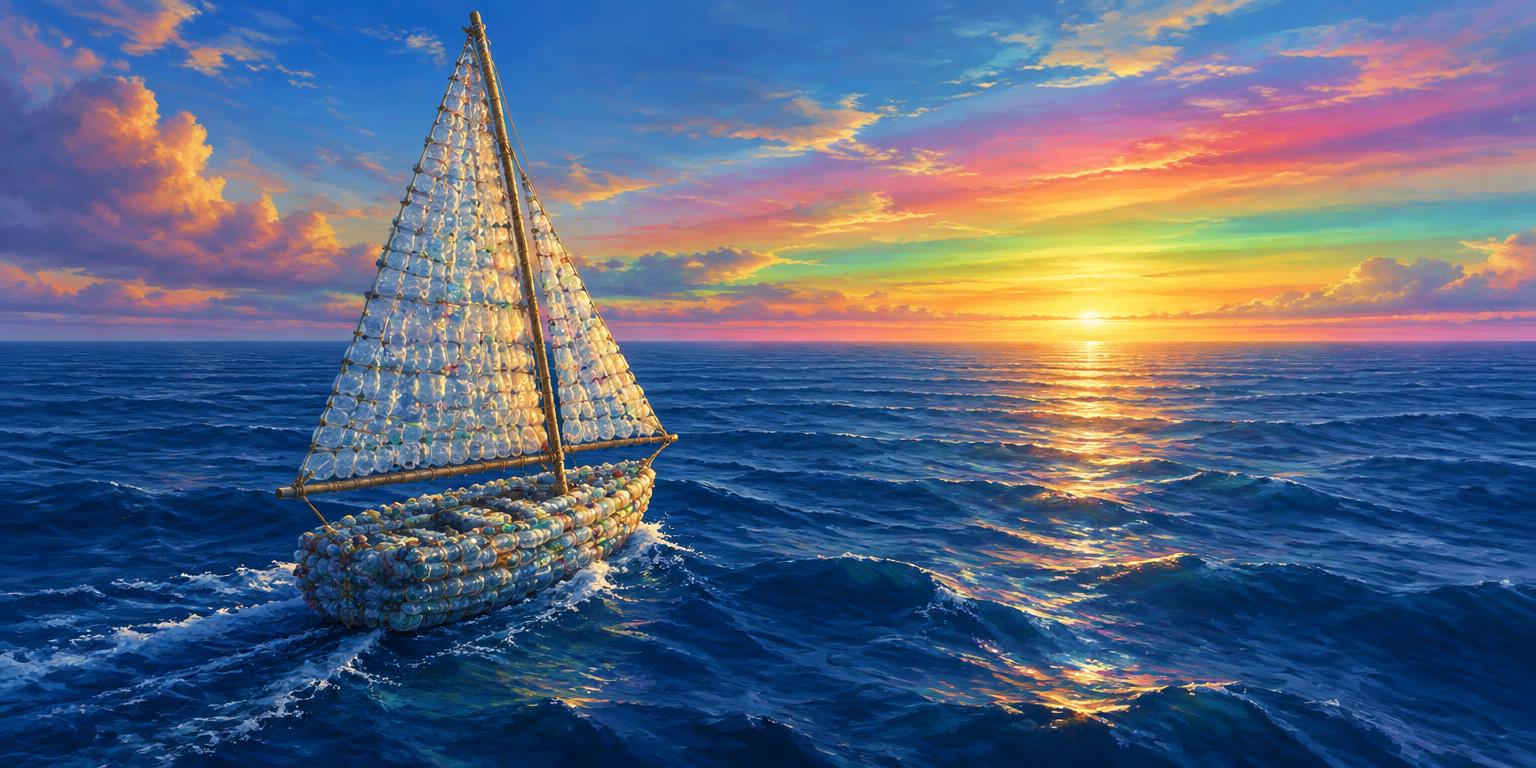
What David de Rothschild and the Plastiki expedition have called to our attention is a massive design problem. What better way to do that than with something that is new and ancient at the same time: an epic voyage. And with a vessel that is homeopathic. A small dose of the very thing we wish to avoid: plastic in the ocean.
In ancient Ireland, where my ancestors come from, there were worlds beyond this world. There was Faery, a land of the little people, the giants, and the banshees. It appeared exactly the same as this world, just a little bit better, an important concept for a melancholy race.
The world to which we would move after we left this life, Tír na nÓg, got a bit better. The people who inhabit it are “the forever young” because they do not age. They call us “the immortals” because we have children and they cannot. They expect and are waiting for Armageddon. For them, the world will end in an instant. They live as if there is no tomorrow, because there might not be.
Our culture has been living as if we are forever young. We throw things “away” as if there is no tomorrow. The plastics in the gyres are the detritus of our unthinking exuberance on one hand, but perhaps our terror on the other. Why would we live like this?
Perhaps it has something to do with Einstein's special theory of relativity. E=mc2 was one of the great discoveries of the last century, but we have not fully integrated its implications. Humans could be facing Armageddon with little warning, just as Hiroshima and Nagasaki did in 1945. In the course of human experience, this is a new possibility. Over the past 60 years, perhaps we have started living as if there is no tomorrow. Perhaps we have acted as if we didn't have children, as if future generations were not a consideration.
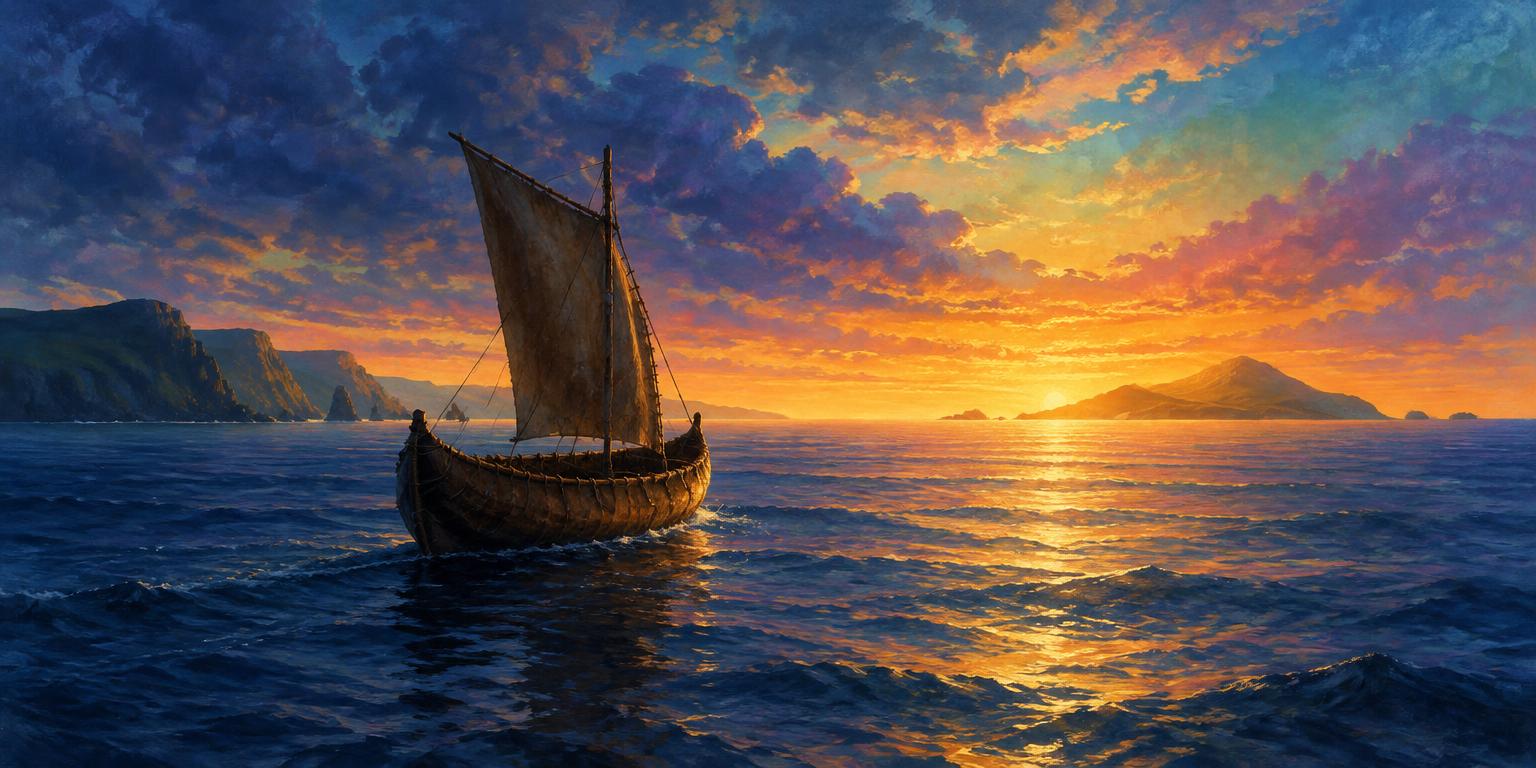
Beyond Tír na nÓg is The Land of Many Colored Things. No one has returned from the Land of Many Colored Things. The presumption is that it's too beautiful to leave. The way to the Land of Many Colored Things was over the western horizon. The ancients would get in a curragh, a keelless seal-skin boat, and sail to the west.
David de Rothschild set forth in a strange and wonderful vessel from the West Coast of North America. His goal was hopeful: to move toward a world where everything was a little bit better. He was in the ocean where the forever young, who lived as if there is no tomorrow, cast their detritus, intentionally or unintentionally. He moved through vast expanses, directed by an internal compass (and probably some support from GPS) and sailed on to his Land of Many Colored Things. He returns to us from over the horizon, to tell us his stories. And the world gets better.